

What Catalog Hygiene Actually Means
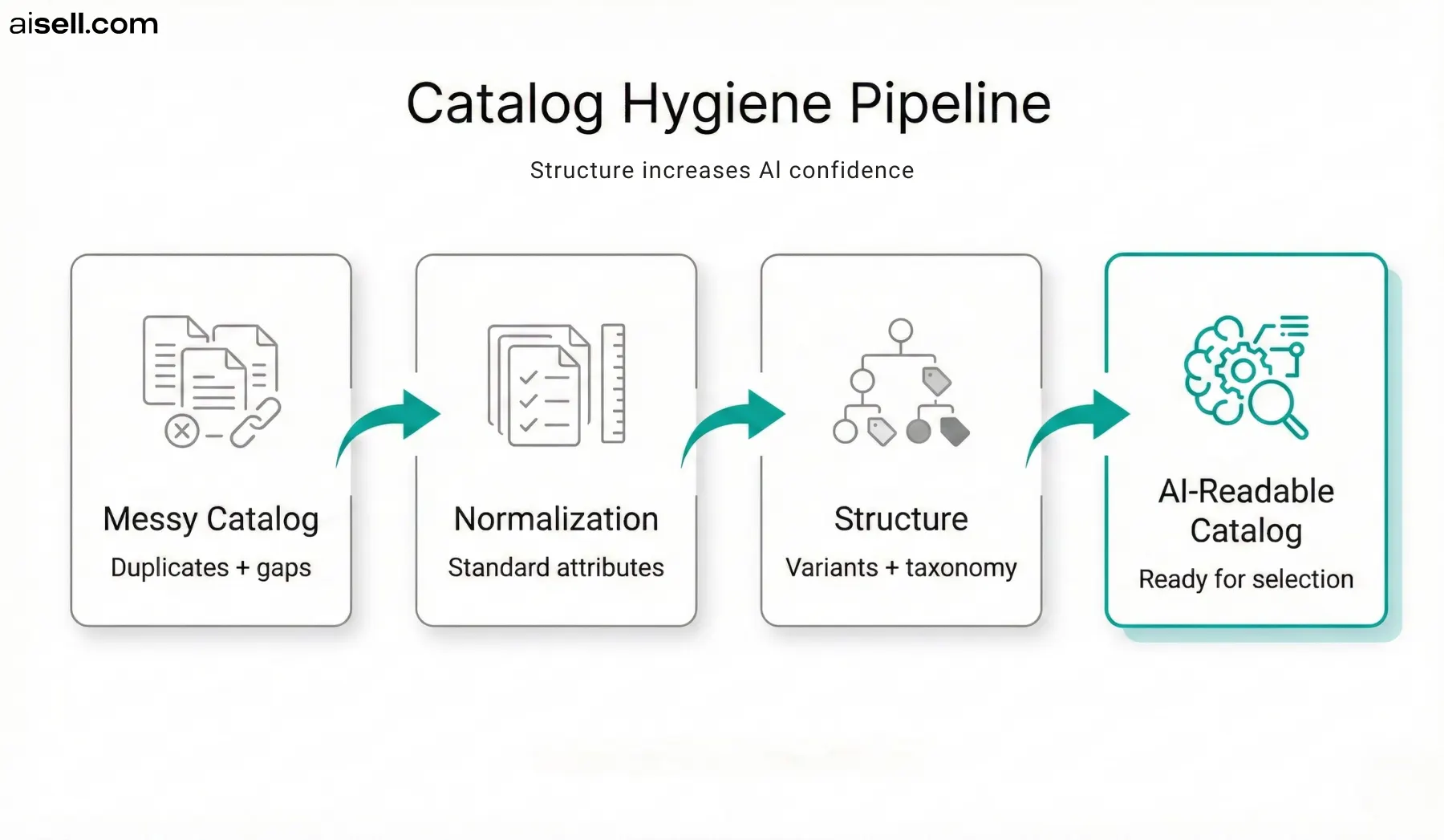
Catalog hygiene is the discipline of keeping your product catalog clean, consistent, and logically structured.
It sounds boring. It is.
But it affects everything.
In practical terms, catalog hygiene means:
- products are clearly defined
- titles and attributes match
- variants follow a logical parent-child structure
- duplicates are removed
- categories and taxonomy are consistent
- attributes are standardized across the catalog
- bundles and kits are not randomly duplicated
- discontinued products are removed or properly marked
A hygienic catalog is not necessarily smaller.
It is understandable.
Why Ecommerce Brands Ignore Catalog Hygiene
Most brands ignore catalog hygiene because messy catalogs still worked.
Search engines tolerated missing attributes.
Marketplaces still ranked products with messy variations.
Ads could buy visibility.
Humans could guess meaning.
AI changes the tolerance level.
AI needs structured inputs.
If the structure is broken, AI cannot evaluate confidently.
Why Catalog Hygiene Becomes a Growth Lever in AI Commerce
AI commerce is not based on browsing. It is based on selection.
Instead of showing users hundreds of options, AI assistants reduce choices and recommend a shortlist.
To do this, AI systems must evaluate:
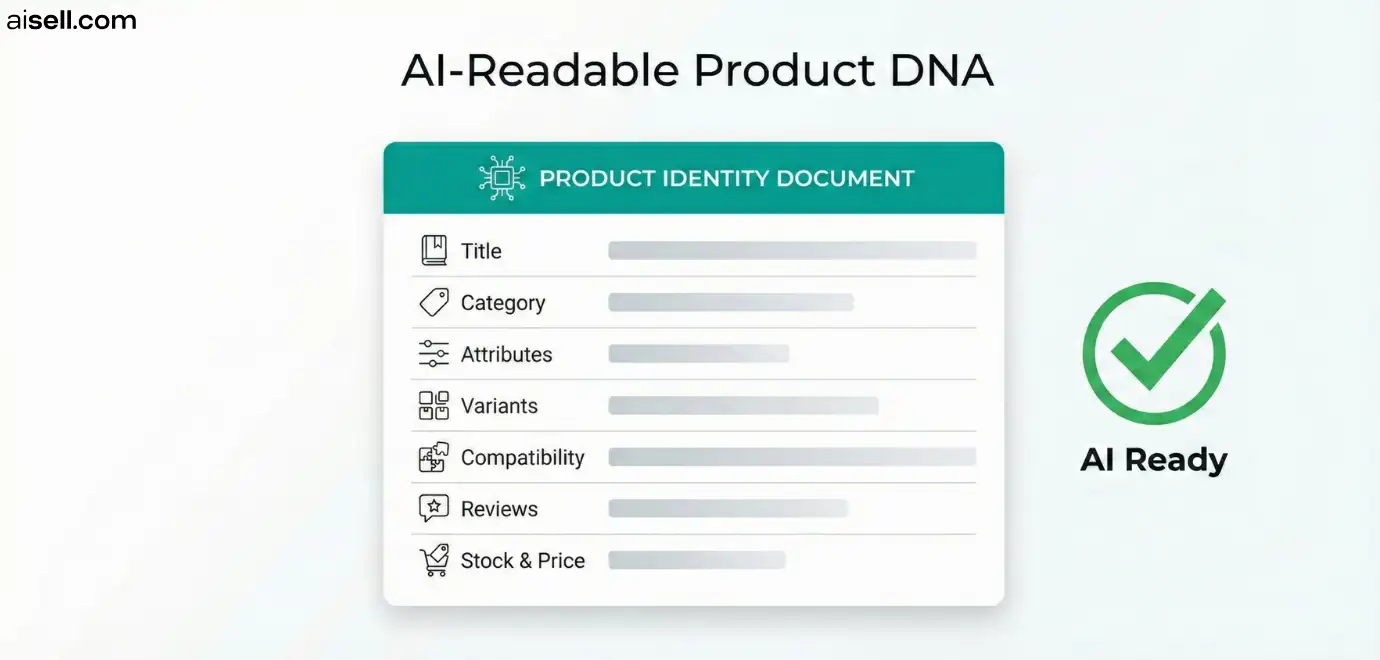
- what the product is
- whether it matches the intent
- whether it can be compared to alternatives
- whether it is safe to recommend
Messy catalogs fail at all of this.
AI Is Conservative by Design
AI assistants do not want to recommend something that could lead to:
- returns
- complaints
- confusion
- wrong compatibility
- wrong size
- bad experience
That means AI systems prioritize products that reduce uncertainty.
Catalog hygiene reduces uncertainty.
Catalog Hygiene Improves AI Confidence
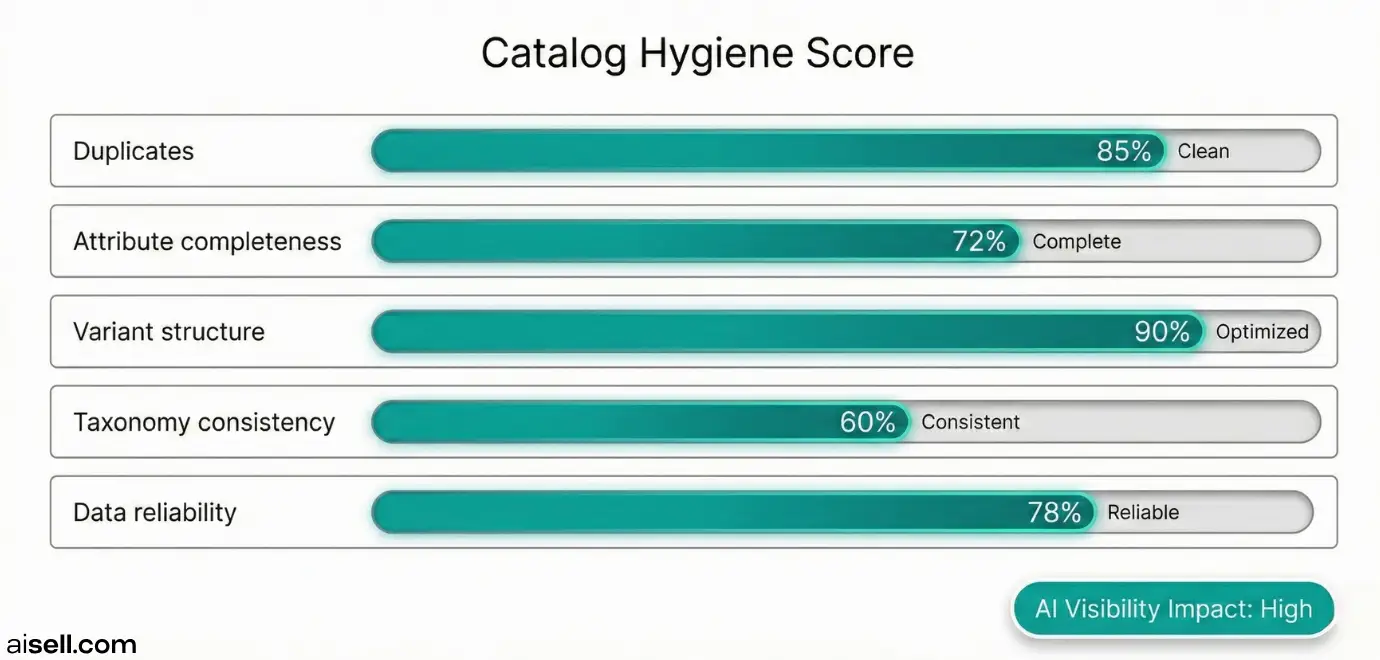
A clean catalog gives AI systems:
- consistent product definitions
- clear variation logic
- reliable attributes
- predictable structure
This increases AI recommendation confidence.
In AI commerce, confidence equals visibility.
Hygiene Increases “Eligibility” Before Ranking
Traditional SEO and marketplace ranking happens after indexing.
AI-driven selection works differently.
AI systems filter products first.
If your product fails filtering, it never competes.
This is why catalog hygiene is a growth lever.
It expands how often your products are included in AI-driven shortlists.
What Catalog Hygiene Fixes (Beyond AI)
Catalog hygiene improves AI visibility, but it also improves almost every ecommerce function.
This is why it is such a high leverage investment.
Cleaner Catalogs Improve Conversion
When products are clearly defined:
- customers understand what they are buying
- variants are less confusing
- expectations match reality
This reduces hesitation.
Conversion improves without touching ads.
Cleaner Catalogs Reduce Returns
Returns often happen because of:
- unclear sizing
- unclear compatibility
- misleading product descriptions
- missing details
Catalog hygiene reduces these issues at the source.
Less returns means higher profitability.
Cleaner Catalogs Improve Ads Performance
Ads work better when:
- product titles are clear
- attributes match targeting
- variants are structured properly
- landing pages reduce confusion
Catalog hygiene improves ad efficiency.
This creates a compounding effect:
better data leads to better ads, which leads to more sales, which leads to more reviews.
Cleaner Catalogs Improve Team Efficiency
Messy catalogs create operational drag.
Teams waste time on:
- fixing duplicates
- manually correcting product info
- handling customer confusion
- troubleshooting feed errors
Catalog hygiene reduces the hidden cost of ecommerce operations.
The 2026 Catalog Hygiene Checklist
If you want to treat catalog hygiene like a growth strategy, it needs a system.
Here is the practical checklist.
1. Define a Single Source of Truth
Decide where product truth lives:
- PIM
- ERP
- feed management tool
- internal database
If truth is spread across spreadsheets, marketplaces, and random tools, hygiene will never scale.
2. Standardize Attribute Formats
Attributes should follow a consistent format:
- units of measurement
- naming conventions
- value types
- compatibility logic
AI cannot interpret “10in” vs “10 inch” vs “10 inches” as cleanly as humans.
Consistency matters.
3. Clean Up Variants and Relationships
Fix parent-child structure.
Remove redundant parent listings.
Make variation differences obvious.
If AI cannot explain why variants differ, it will avoid recommending them.
4. Remove Duplicates and Overlaps
Duplicates create ambiguity.
AI systems avoid ambiguity.
If two products overlap heavily, either:
- consolidate them
- or differentiate them clearly
5. Audit Product Titles for Clarity
Titles should define the product clearly:
- product type
- main differentiator
- size or compatibility where relevant
Keyword stuffing is not clarity.
6. Maintain Catalog Hygiene Continuously
Catalog hygiene is not a one-time cleanup.
It must be:
- monitored
- audited
- maintained
Brands that treat hygiene as an ongoing process will compound advantage over time.
Key Takeaways
Catalog hygiene used to be an operational concern.
In AI commerce, it is becoming a strategic growth lever.
AI systems reward products that are easy to interpret, compare, and recommend.
Clean catalogs increase eligibility, reduce returns, improve conversion, and strengthen long-term visibility.
The brands that win in AI commerce will not only have better marketing.
They will have better structure.